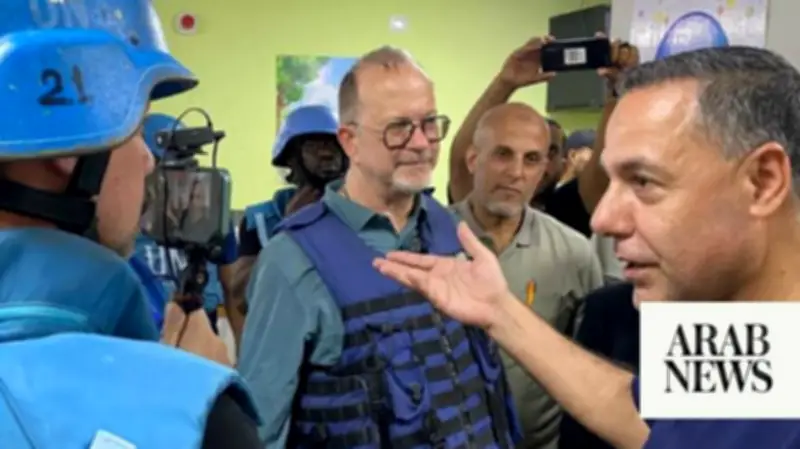
The family of Dr. Hussam Abu Safiya has expressed deep concern over his health after he was transferred to solitary confinement in Nafha Prison. The move occurred shortly after his legal team filed an appeal with the Israeli Supreme Court challenging his continued detention without formal charges for the past 17 months, according to his eldest son, Elias Abu Safiya.
Family Shocked by Harsher Measures
Instead of witnessing improvements in his detention conditions or progress toward justice, the family was shocked by the transfer to solitary confinement, Elias told Arab News from Kazakhstan. He said it felt as though calls for basic rights were met with harsher measures. The family had hoped the appeal would lead to fairness and accountability, but the transfer has deepened concerns for his safety and well-being.
Abu Safiya, a pediatrician and director of Kamal Adwan Hospital in northern Gaza, was arrested on December 27, 2024, after refusing Israeli evacuation orders. He remained at what was then the last functioning hospital in the besieged north to care for wounded patients and children.

Medical Condition Worsens
Elias said his 53-year-old father developed a heart condition during detention, which the family attributes to mistreatment in prison. He also requires surgery to remove six pieces of shrapnel from his left thigh, sustained in an Israeli drone strike on the hospital on November 23, 2024, weeks before his arrest.
We do not have any information about my father's condition today, Elias said. Every day, our family lives with fear and uncertainty because my father requires ongoing medical care and we do not know if he is receiving the treatment he needs.
The family has not seen Abu Safiya since his arrest, relying instead on rare updates from lawyers about his condition in Israeli custody. They were informed that he had been transferred from Negev Prison to solitary confinement in Nafha Prison, but Israeli authorities provided no explanation for the move.
Solitary Confinement as Punishment
This has increased our fears, because solitary confinement is not simply an administrative measure, it is a harsh form of psychological and physical punishment, especially for someone who is already ill and weakened, Elias said. He added that the family has yet to receive information on Abu Safiya's next court hearing, but expects an update from Israeli authorities in the coming days.
Abu Safiya, a father of six, is held under Israel's Unlawful Combatant Law, which allows prolonged detention without the presentation of formal evidence or criminal charges. His detention is extended every six months.
Background of a Heroic Doctor
Before his detention, Abu Safiya became one of the most prominent voices documenting the collapse of Gaza's healthcare system and the challenges facing medical workers under bombardment, siege, and severe shortages of supplies. During the war, he lost his son Ibrahim in a drone strike at the hospital entrance, was wounded in an Israeli strike on the hospital, saw colleagues killed, and was repeatedly summoned for interrogation.
Multiple human rights organizations, UN bodies, and doctors around the world have called for Abu Safiya's immediate release. His lawyer and UN bodies have repeatedly described his harsh detention conditions, where he has been denied access to medical care and food.
International Calls for Release
In late April, Physicians for Human Rights Israel petitioned the Supreme Court for his immediate release, along with 13 other doctors from Gaza held without charge for more than a year. The Israeli rights group said the crackdown on healthcare workers in Gaza has effectively paralyzed an already fragile healthcare system under constant destruction, stressing that Gaza's postwar rehabilitation cannot begin without the release of medical workers. It said it received reports of severe medical neglect, starvation, and abuse amounting to torture that have become systematic across Israeli detention facilities.
On March 24, UN experts called for Abu Safiya's immediate release and demanded that he be granted access to medical examination and treatment after receiving reports that he had been subjected to severe torture. They warned that he was facing cruel and degrading treatment.

Elias called for urgent international action to secure his release and bring justice to medical workers held in Israeli prisons without charge. Cut off from the outside world and separated from his family and loved ones, my father spends his days in isolation, he said. This is not a man who committed a crime. He is a doctor who dedicated his life to treating patients, caring for children and helping the wounded.