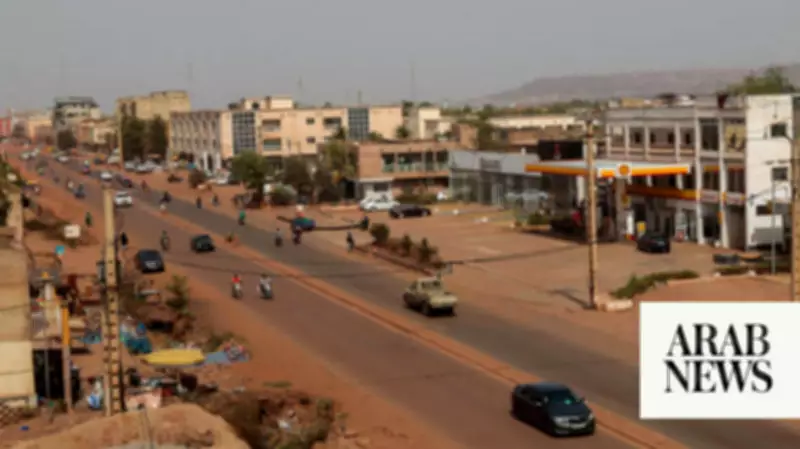
Sustained gunfire echoed through the garrison town of Kati near Mali's capital on Sunday, a Reuters witness reported, marking a second day of violence after one of the largest coordinated attacks in the country in recent years. The assaults, carried out by an Al-Qaeda affiliate and Tuareg rebels, targeted multiple locations across Mali.
UN Condemns Violence
The United Nations called for an international response to the escalating violence and terrorism in the West Africa Sahel region following Saturday's large-scale assaults. A UN spokesperson posted on X, expressing deep concern and strong condemnation of the attacks.
Coordinated Attacks Across Mali
An Al-Qaeda affiliate and Tuareg rebels claimed responsibility for the coordinated attacks around Bamako, in gold-producing areas, and elsewhere across Mali. This operation is among the boldest insurgent actions against the military-led government. The final death toll remained unclear on Sunday, as did the status of the contested city of Kidal, which insurgents claimed to have recaptured from government forces.

Government spokesperson Issa Ousmane Coulibaly stated that 16 people were injured and the situation was under control in all attacked areas. A three-day overnight curfew has been implemented.
Russian Mercenaries Involved
The Azawad Liberation Front (FLA), a Tuareg-dominated rebel group, said on Sunday it had seized back control of Kidal. An FLA spokesperson posted on X that a deal allowed Russian mercenaries to leave a besieged camp outside the city, where Malian armed forces remained entrenched. The FLA claimed responsibility for the wide-scale operation alongside Al-Qaeda-linked Jama'at Nusrat Al-Islam wal-Muslimin (JNIM). JNIM also issued a statement claiming responsibility for attacks in Kati, Bamako's airport, and northern areas including Mopti, Sevare, and Gao. Reuters could not independently verify these claims.
Saturday's attacks highlight Mali's government struggle to deliver security after coups in 2020 and 2021, having expelled Western forces and turned to Russia for support. In September 2024, JNIM attacked a gendarmerie training school near Bamako airport, killing about 70 people. More recently, it imposed a blockade on fuel imports, causing power and supply shortages in the capital.
The government under Assimi Goita has sought closer ties with Washington, aiming to rebuild security cooperation and explore mining opportunities. Mali's foreign minister told Reuters that neighboring states and foreign powers support terrorist groups but declined to name them.