Security lockdowns in Islamabad ahead of a possible second round of United States-Iran talks have severely impacted businesses, with stakeholders estimating financial losses running into billions of rupees, traders said this week.
Lockdown Measures and Business Impact
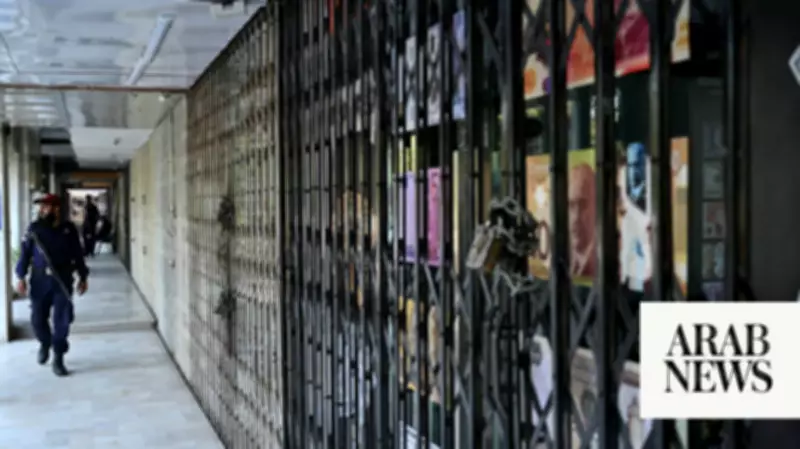
Authorities sealed Islamabad's Red Zone, which houses key government buildings and foreign missions, while several connecting roads and highways used for transporting diplomats have experienced sporadic closures. These restrictions have left businesses, particularly in Islamabad's Blue Area business hub, without customers and prompted corporate offices to instruct employees to work remotely as Pakistan's mediation efforts intensified this week.
The Islamabad Chamber of Commerce and Industry (ICCI) estimates losses from business closures, restrictions on goods transport entry, and other factors in billions of rupees, although the government allowed the supply of essential items late Friday.

"Usually, trade and business here are so heavy that it's hard to find a parking spot," Imran Bukhari, a traders' representative in Blue Area, told Arab News on Friday. "But since the lockdown started, business here has decreased by at least 70 percent."
Stringent Security for International Delegations
The current, more stringent cordons were established to ensure foolproof security for international delegations following an extension in the US-Iran ceasefire on Wednesday. Iranian Foreign Minister Abbas Araghchi led a delegation to Islamabad late Friday, while the White House said President Donald Trump would send envoys Steve Witkoff and Jared Kushner to Pakistan to meet with Iranian officials, though Tehran has ruled out any direct meetings with US officials.
Widespread Commercial Disruption
The impact of security measures for the high-stakes talks spans the entire capital's commercial ecosystem, according to traders. Raw materials such as wheat for flour mills are stuck at the city's entry points, while the fruit and vegetable market has suspended operations as trucks carrying perishable goods remain stranded on the city's outskirts.
"Goods worth crores of rupees are stuck in trucks and have perished," Bukhari said. Hotel, hostel, and guesthouse occupants were asked to vacate as part of security protocols or due to lack of access in various areas. Small shopkeepers in parts of Islamabad reported a near-total absence of customers deterred by police checkpoints and massive traffic detours.
Daily Life Disrupted
Beyond immediate trade losses, the closure of schools and restricted business hours, now capped at 8pm for most businesses, have brought daily life to a standstill. Pakistan, which has positioned itself as a key intermediary between the US and Iran, hosted the first round of talks on April 11-12, which failed to yield a breakthrough. Islamabad witnessed similar measures during the first round of negotiations.
Staggering Losses but National Obligation
While there has been no consolidated data, the ICCI said the losses over the last two weeks have been staggering. Speaking to Arab News, ICCI President Sardar Tahir Mehmood said though the financial pain is acute, the business community views the mediation as a national obligation.
"Naturally, we are facing losses worth billions of rupees, and the government is also losing revenue and struggling to meet its targets," Mehmood said. "But the cause for which these negotiations are taking place is much greater than the cost. Therefore, we stand with our government."