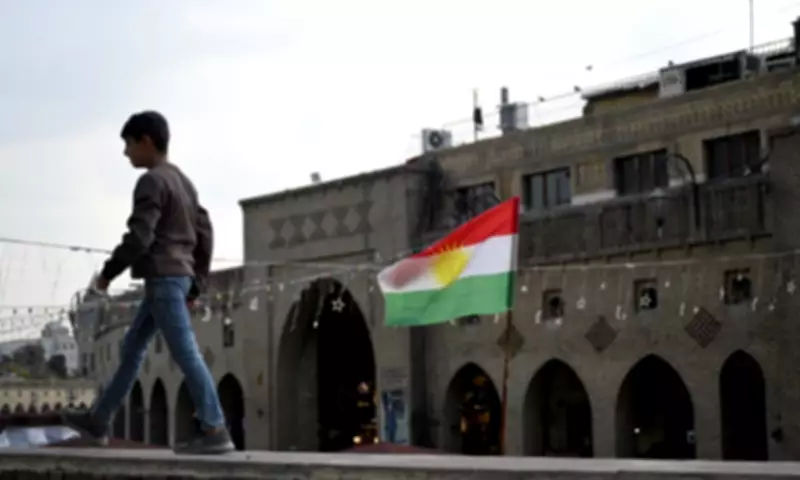
Trump's Evolving Position on Kurdish Involvement in Iran
Last week, President Donald Trump engaged in discussions with Iraqi and Iranian Kurdish leaders, proposing "extensive US aircover" and logistical assistance for armed factions to cross from Iraq into Iran. The objective was to displace regime forces, with Trump reportedly urging Kurds to align with America and Israel against Iran. This strategy mirrors past US approaches, notably in combating the Islamic State, where Kurdish fighters served as frontline allies.
Kurdish Readiness and Regime Strength
However, the initiative quickly lost momentum. Over the weekend, Trump reversed course, stating, "We don't want to make the war any more complex than it already is. I have ruled that out, I don't want the Kurds going in." Abdullah Mohtadi, secretary general of the Komala Party of Iranian Kurdistan, explained from an undisclosed location outside Iran that Kurdish forces are not prepared to launch an offensive. He noted "several thousand" peshmergas in Iraq and "tens of thousands" of willing youth in Iranian Kurdistan, but emphasized the Iranian regime's enduring power.
"For us to make any move, we need to have the Revolutionary Guards and repressive forces of the Iranian regime sufficiently weakened — weakened enough for the people in the cities to rise and the Peshmerga forces to come in," Mohtadi said. "Before that, we will avoid it." He clarified that Kurdish fighters have not crossed into Iran, maintaining a "defensive position" in Iraqi camps under constant drone and missile attacks from Iran.

Historical Context and Kurdish Marginalization
The Kurds, estimated at 25 million to 30 million people across Iran, Iraq, Syria, and Turkey, are often described as the largest ethnic group without a state. In Iran, home to 10 million to 15 million Kurds in the northwest, they face marginalization. The 2022 death of Mahsa Amini, an Iranian Kurdish woman, sparked protests and popularized the Kurdish slogan "woman, life, freedom" within the broader opposition.
In Iraq, the Kurdish region has enjoyed autonomy since the 1991 Gulf War, hosting exiled Iranian Kurdish groups. Yet, Iraqi Kurdish leaders are hesitant to engage in the US-Iran conflict, fearing Iranian retaliation. Mohtadi acknowledged this, noting Erbil, capital of the Kurdish Regional Government, has faced near-constant missile bombardment since the war began.
Objectives and Misconceptions
Mohtadi denied aspirations for an independent Kurdish state, advocating instead for a "democratic, secular, unified Iran" with a federal system respecting minority rights. He rejected claims that backing militias could cause civil war, blaming the regime for regional chaos. "Who shoots missiles to neighboring countries? Who massacres their own people? It's not us, it's not the Iranian opposition, it's not the Iranian civil society, it's the Revolutionary Guards," he asserted.
US-Kurdish Relations: A Checkered History
The US-Kurdish relationship is marked by ambivalence. In the 1970s, the US supported Kurdish groups against Iraq, only to withdraw, leading to massacres—a pattern repeated during the Gulf War. More recently, Syrian Kurds allied with the US against ISIS, establishing Rojava, but were later urged to merge with Syrian forces under US-aligned leadership, ending their semi-autonomy. A Reuters article quoted Syrian Kurds warning Iranian Kurds about US abandonment.
Mohtadi countered this narrative, highlighting US air support that aided the Kurdish Regional Government in Iraq and protected Kurds from ISIS. "I personally have witnessed many instances since 1991 that the United States helped Kurds and saved them," he said, expressing gratitude to the Trump administration for strikes against the Iranian regime.
Uncertain Future and Regional Implications
Trump's shift may stem from doubts about Kurdish capabilities, fears of Iranian chaos, or pressure from allies like Turkey, which opposes Kurdish nationalism. Mohtadi, a 76-year-old veteran of Kurdish politics, views the regime's weakness as a "unique opportunity" for broader change in Iran and the Middle East. Yet, Trump's plans now exclude extravagant Kurdish support, leaving Kurds in a familiar predicament: navigating a regional war they did not start, seeking stability amid geopolitical shifts.