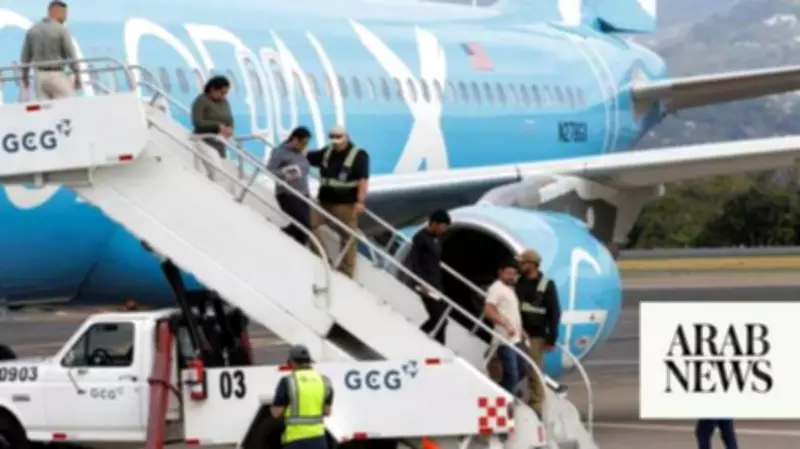
Nine migrants from four African countries arrived in Cameroon this week after being expelled from the United States, part of a controversial deal between the two nations, a lawyer told AFP on Thursday.
Details of the Deportation
The deportees arrived on Wednesday and originated from Ghana, Angola, Ethiopia, and Congo-Brazzaville. Cameroon is among several African countries that have agreed in recent months to participate in a scheme allowing the United States to send undocumented migrants to third countries when obstacles prevent their return to their home countries.
The group, consisting of six women and three men, was part of the third such flight since January, bringing the total number of immigrants deported by the United States to Cameroon to 26, according to US immigration lawyer Alma David.

Cameroonian lawyer Joseph Awah Fru, who monitored the first two groups after their arrival in Yaounde, confirmed the arrival of this third flight to AFP.
Financial and Legal Aspects
According to The New York Times, Washington is paying Cameroon $30 million to participate in the scheme. Other African countries that have reached similar agreements include Equatorial Guinea, Ghana, Rwanda, South Sudan, Eswatini, and the Democratic Republic of Congo.
Most of these immigrants are prevented from deportation to their own countries by the US justice system due to safety concerns, and are therefore sent to a third country, which can then expel them. Of the 17 people previously deported to Cameroon, four have been sent to their countries of origin: Morocco, Angola, and Senegal.
US courts had ruled that two Moroccan women’s fears for their safety should they return to Morocco were well-founded. However, after being sent back, they are now living there in hiding, according to Awah.
The remaining 13 individuals are staying at a center run by Cameroonian authorities in conjunction with the International Organization for Migration (IOM) and will be able to apply for asylum in Cameroon if they wish.
Criticism from Human Rights Groups
In September, Human Rights Watch stated that these expulsions under “opaque agreements” violated international law and should be rejected. The organization called for an end to such practices, highlighting the risks faced by migrants forced to relocate to third countries.