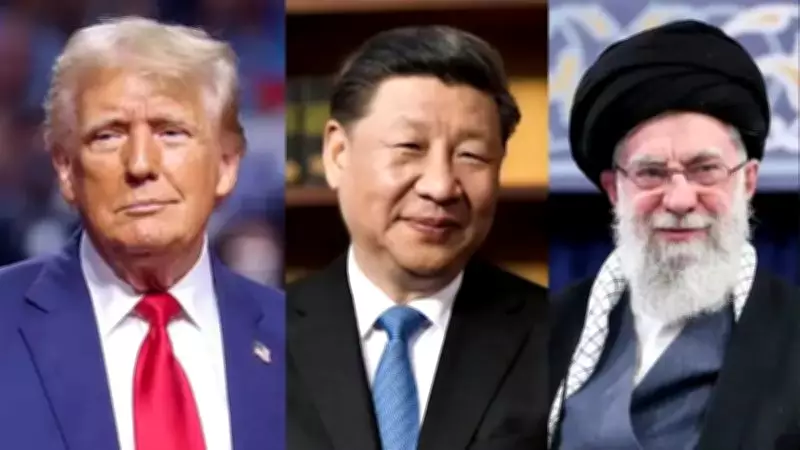
US Foreign Policy on Iran Triggers Strategic Shift Towards China
Analysts and foreign policy experts are raising alarms that the United States' approach to Iran is dictating a significant strategic pivot towards China. This development is reshaping global geopolitical dynamics, with profound implications for international relations and regional stability. The shift underscores how Washington's Iran policy is increasingly influencing its broader strategic calculations, particularly in the Indo-Pacific region.
Geopolitical Realignment and Its Consequences
The pivot towards China is seen as a direct consequence of the US's focus on containing Iran's influence in the Middle East. By reallocating diplomatic and military resources to address challenges posed by Iran, the US is inadvertently strengthening China's position on the global stage. This realignment is not merely a tactical adjustment but a fundamental change in how the US perceives and engages with major powers.
Experts note that this shift could lead to increased tensions between the US and China, as Washington seeks to counterbalance Beijing's growing assertiveness. The move also risks destabilizing regions where both Iran and China have vested interests, such as Central Asia and the South China Sea. The interplay between US actions in the Middle East and its strategic posture in Asia is becoming more pronounced, highlighting the interconnected nature of modern geopolitics.

Implications for Regional and Global Stability
The US's pivot towards China, driven by its Iran policy, has far-reaching implications. In the Middle East, it may embolden Iran to pursue more aggressive policies, knowing that US attention is divided. Conversely, in Asia, it could accelerate an arms race and heighten conflicts over territorial disputes. This dual-front challenge complicates US foreign policy objectives and strains alliances with key partners in both regions.
Moreover, this strategic shift affects global economic dynamics, as trade and investment patterns adjust to the new geopolitical realities. Countries caught in the crossfire, such as those in Southeast Asia and the Gulf, may face difficult choices in aligning with either the US or China. The situation calls for a nuanced approach to diplomacy, balancing immediate security concerns with long-term strategic interests.
In summary, the US's Iran policy is not just a regional issue but a catalyst for broader geopolitical changes. As the US pivots towards China, the world watches closely, aware that the outcomes will shape international relations for years to come. Policymakers are urged to consider the cascading effects of such shifts to avoid unintended consequences and promote global stability.