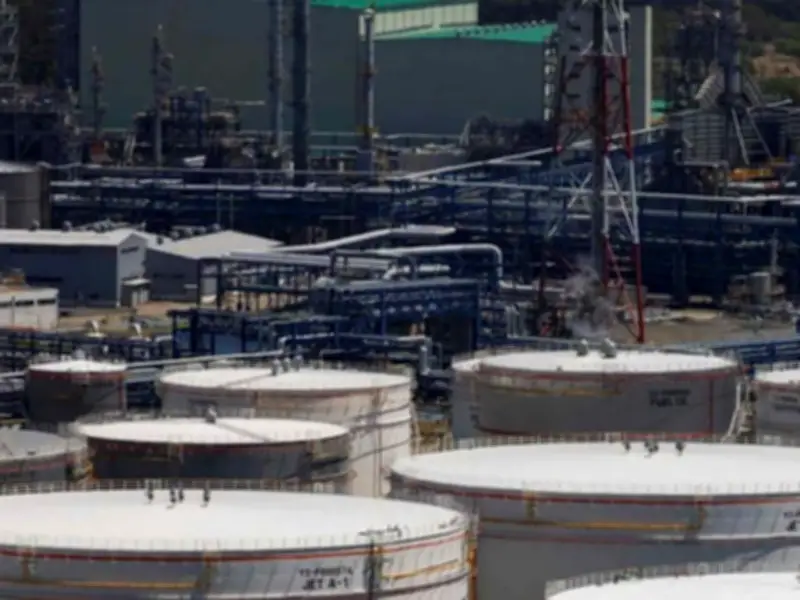
NEW YORK: Oil stockpiles in the world's largest economies are headed toward the lowest levels since at least 2003, as top consuming nations tap inventories at a record pace to plug the loss of over 11 million barrels a day of Middle Eastern output due to the Iran war, the US Energy Information Administration said on Tuesday.
Total oil inventories in the members of the Organisation for Economic Cooperation and Development will fall to just under 2.3 billion barrels by December, the EIA said, based on its current assumption that marine traffic through the Strait of Hormuz is unlikely to return to pre-conflict levels until early 2027.
Oil prices fell about 5% on Tuesday after Iran and Israel said they had halted attacks on each other following an appeal from US President Donald Trump. Brent futures fell $4.30, or 4.6%, to $89.95 a barrel at 1638 GMT. US WTI crude slid $4.95, or 5.4%, to $86.35.

The record pace of inventory drawdowns underscores the severity of the supply disruption caused by the conflict in the Middle East. The EIA's projections highlight the vulnerability of global oil markets to geopolitical shocks, particularly when they affect critical chokepoints like the Strait of Hormuz, through which about 20% of the world's oil passes.
Analysts noted that even with the temporary ceasefire, the damage to infrastructure and the risk of renewed hostilities could keep the strait partially blocked for years. This would force consuming nations to continue relying on strategic reserves, which are now being depleted at an unsustainable rate.
The price drop on Tuesday provided some relief to consumers, but market watchers warned that the underlying supply deficit remains acute. If the ceasefire fails to hold, prices could spike again, potentially exceeding $100 per barrel.