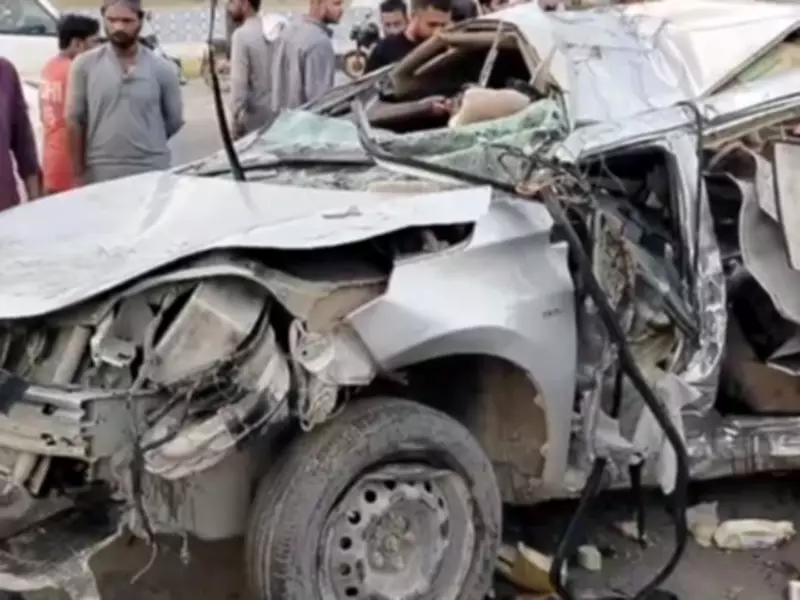
The Sindh government has enacted a landmark regulation, making third-party vehicle insurance mandatory for all vehicles operating within the province. This significant policy shift introduces a standardized compensation framework for individuals injured or killed in road accidents, fundamentally altering how victims receive financial redress.
Compulsory Coverage and Streamlined Payouts
Under the newly passed Provincial Motor Vehicles (Amendment) Bill 2026, third-party insurance is now a legal requirement. Previously, only vehicle insurance, covering damage to the vehicle itself, was compulsory. Jamshed Memon, Deputy Director of the Motor Registration Wing of the Sindh government, confirmed this critical change, stating the new law mandates coverage for passengers—referred to as third parties.
The system is designed for efficiency. When an accident occurs involving an insured vehicle, the affected individual or their legal heirs will receive compensation directly from the insurance company without the need to initiate lengthy court proceedings. The concerned insurer is legally obligated to make the payment as per the government-fixed rates, streamlining the process for victims and their families during difficult times.

Detailed Compensation Schedule
The specifics of compensation are meticulously outlined in the Fifteenth Schedule of the amendment bill. The government has not only made insurance compulsory but also increased the payout amounts for various injuries and fatalities.
Key compensation rates include:
- Death in an accident: Rs700,000 paid to legal heirs.
- Loss of one or both hands, feet, arms, legs, or eyes: Rs500,000 per person.
- Loss of right-hand thumb: Rs150,000.
- Loss of left-hand thumb: Rs100,000.
- Loss of a right-hand finger: Rs100,000.
- Loss of a left-hand finger: Rs75,000.
- Loss of big toe: Rs30,000.
- Loss of any other toe: Rs25,000.
A Sindh Police officer involved in road accident analysis highlighted that these revised rates represent a proactive step toward better victim support. However, the fixed nature of these payouts treats all victims uniformly, without accounting for individual circumstances such as the severity of specific injuries, long-term medical needs, or loss of earning capacity.
International Context and Local Perspectives
Globally, third-party insurance systems vary significantly. In Japan, for instance, compensation for death is set at approximately 200,000 US dollars, while compensation for serious injury and permanent disability is even higher, at around 270,000 US dollars. A Sindh Police officer noted that Japan sets higher compensation for severe injuries because they often lead to permanent disability, requiring lifelong medical care and resulting in a complete loss of livelihood—a consideration not explicitly factored into Sindh's fixed-rate model.
Local lawyer Muhammad Ali Sarang provided insight into more nuanced international practices. "In developed countries, compensation is typically determined based on the severity of physical harm," Sarang explained. "Authorities assess the extent of disability—whether permanent or temporary—the impact on earning capacity, and the expected duration of medical treatment. This individualized approach ensures fairness but is absent in Sindh's current fixed-rate system."
Dr. Muhammad Bakhsh, a medical practitioner from Jinnah Postgraduate Medical Centre, added a physiological perspective. "While most countries do not differentiate compensation for injuries to the right versus left side, those that do often cite the greater functional reliance on the right hand or foot for daily activities and employment. This rationale underscores why loss of the right side is sometimes deemed more significant," Dr. Bakhsh stated, highlighting a layer of complexity not addressed by the province's uniform rates.

Implications and Future Considerations
The Sindh government's move to mandate third-party insurance is a positive step toward enhancing road safety and providing guaranteed financial support to accident victims. By eliminating the need for court intervention, it promises quicker relief. However, the fixed compensation structure, while administratively simpler, may not fully address the diverse and often severe long-term consequences faced by victims, particularly those with permanent disabilities or unique medical needs.
As the law is implemented, stakeholders, including legal experts, medical professionals, and insurance companies, will likely monitor its effectiveness. The debate between standardized payouts and individualized assessments, as seen in countries like Japan, may influence future amendments to ensure the system remains both efficient and equitable for all affected individuals in Sindh.