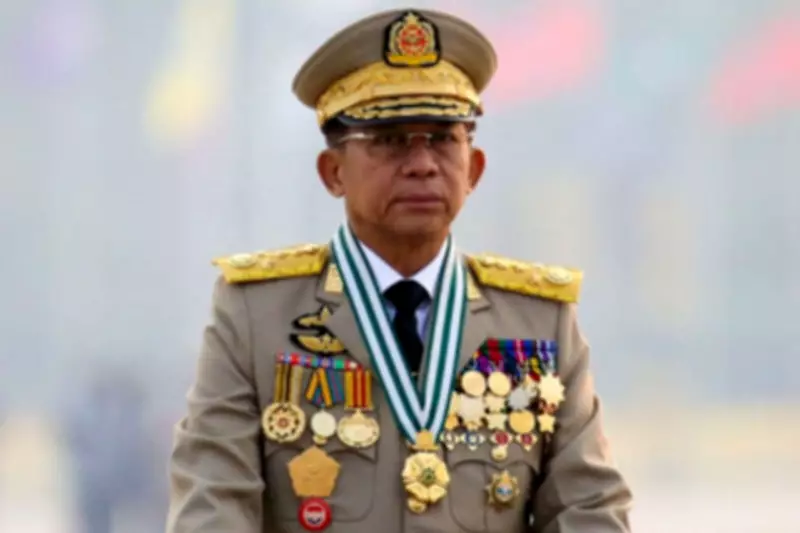
Myanmar's military junta has announced the formation of a new entity designed to oversee both military and civilian administration, a strategic move that analysts believe will allow paramount ruler Min Aung Hlaing to assume the presidency without relinquishing his firm grip on the armed forces. This development comes just days after the completion of the final phase of an election that will see a parliament convene next month, with power nominally transferred to a civilian government.
Creation of the Union Consultative Council
In a late Tuesday announcement through state media, the junta revealed plans to establish the five-member Union Consultative Council. According to Naing Min Khant, programme associate at the Institute for Strategy and Policy - Myanmar think-tank, this body's mandate is exceptionally broad, granting it control over every critical component of national security and the legislative process.
'The formation of the Union Consultative Council represents a significant institutional shift, likely to create a 'super-body' designed to hold supreme authority above the executive, legislative, and judicial branches,' Naing Min Khant explained. A spokesperson for the junta did not respond to calls seeking comment regarding the council's establishment.

Historical Context and Current Situation
Min Aung Hlaing seized control of Myanmar in a 2021 coup that ousted the civilian government led by Nobel Peace Prize winner Aung San Suu Kyi. This action triggered widespread protests that have since escalated into a nationwide civil war. According to the Armed Conflict Location & Event Data Project, more than 93,000 people have been killed in the ensuing violence.
The sixty-nine-year-old Hlaing has indicated his intention to hand over 'state responsibilities' to the next government, and he is widely expected to become president. The military-backed Union Solidarity and Development Party dominated the recent election, winning 81% of available upper and lower house seats in a contest criticized by the United Nations, several Western nations, and human rights groups as a one-sided exercise to maintain the ruling generals' power through proxies.
Legal and Political Implications
State-run media did not provide a specific reason for the council's formation. However, according to two legal experts, this new entity will potentially enable Hlaing to become president while ensuring he retains full control over the military, which has governed Myanmar for five of the past six decades. Additionally, it would grant him authority over the civilian-led administration and legislative matters.
'I believe that this newly appointed Union Consultative Council will oversee the new [military] commander-in-chief on one hand, and the government on the other,' said Kyee Myint, noting that the body would prevent any successor to Hlaing as military chief from accumulating excessive power.
Concerns Over Accountability
A significant concern raised by analysts is the apparent lack of oversight for this new council. Naing Min Khant emphasized this point, stating, 'A defining feature of this arrangement is its total lack of accountability.' This structure effectively creates a centralized power mechanism with minimal checks and balances, potentially consolidating authority in the hands of a single individual.
The establishment of the Union Consultative Council marks a pivotal moment in Myanmar's political landscape, as it institutionalizes military influence within the framework of a nominally civilian government. This move underscores the junta's strategy to maintain control while navigating the complexities of political transition and international scrutiny.