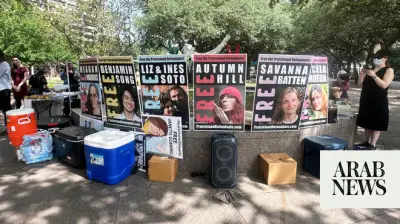
The results of this week's Democratic primaries in New York City have sent shockwaves through the US electoral system, with socialist candidates making significant gains. New York City Mayor Zohran Mamdani emerged as a key figure, as his endorsed candidates swept primaries for Congressional seats. At least three Democratic Socialist candidates defeated incumbents or establishment-backed opponents, including those funded by the Israeli lobby. This outcome represents a vote against traditional politicians, the Democratic party leadership, the status quo, and Israel—a shift unthinkable just a few years ago.
Impact on the Democratic Party
The Democratic party establishment is experiencing panic as the ground shrinks beneath centrists, caught between the right-wing MAGA movement and leftist Democratic Socialists. Following New York's results, more candidates aligned with the Left are gaining political and financial support. The mid-term polls may hold surprises for traditionalists, who are often products of the existing system, resistant to change, and prone to misreading the electorate until it is too late.
Parallels with Pakistan's Political System
This dynamic mirrors Pakistan's political landscape, where every party in parliament is a traditionalist. The PTI, despite claims of radicalism, has been co-opted by the establishment. The fundamental question in Pakistan is the nature of desired change: some want new faces, others a new system, and many seek any change that improves their lives. This disillusionment is fueled by the digital generation, which has less tolerance for the status quo.

Failed Experiments and Hybrid Model
Pakistan has experienced changes of faces and systems, but none have genuinely improved citizens' lives. The hybrid model, in place since 2018, has not delivered real change. The country is burdened with a yawn-inducing government, a purposeless opposition, an ineffective judiciary, a servile media, and an all-powerful establishment. If bottom-up change is impossible, can top-down enforcement work? Constitutional amendments are being crafted to usher in change, but their effectiveness remains uncertain.
Desired Change and Reality
The nature of change Pakistanis want is no secret: quality education for every child, best healthcare for all, and equal application of law. However, such a Pakistan is nowhere in sight, and no one even talks about it. Radical change through the ballot box is not realistic, nor is change from outside the system. Traditional parties in parliament are so out of touch they belong in a museum. Every path seems blocked.
Inevitable Change and Future Prospects
If the current state continues, only marginal improvements can be expected. For a new generation plugged into a culture of empowerment and entitlement, a marginally better Pakistan is unacceptable. Change is inevitable, but its shape remains unclear. Will empowered local bodies produce non-traditional young leadership? Will a strengthened establishment reform the system? Or will Pakistan collapse back into mediocrity under a risk-averse traditional elite? The wait for a figure like Mamdani could be long, but the young have finite patience.