Sindh Opposition Leader and Minister Engage in War of Words Over Karachi's Future
A fierce verbal confrontation unfolded on Tuesday between Opposition Leader in the Sindh Assembly, Ali Khurshidi, and Sindh Minister for Culture and Tourism, Syed Zulfiqar Ali Shah, centering on critical issues of Karachi's governance, ongoing development initiatives, and political accountability. The exchange occurred during separate press conferences, highlighting deep-seated political divisions in the province.
Opposition Leader Criticizes Karachi's Living Conditions and Government Inaction
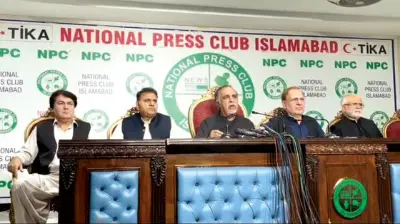
Addressing journalists at the Karachi Press Club alongside lawmakers from MQM-Pakistan, Ali Khurshidi launched a scathing critique of the current state of affairs in Karachi. He asserted that his party consistently voices the concerns of ordinary citizens, bringing to light matters that directly impact their daily lives. In a stark assessment, Khurshidi described Karachi as 'one of the worst cities to live in', raising profound questions about the efficacy of democracy when its promised benefits fail to materialize for the populace.
Khurshidi pointedly criticized the Sindh government for its absence from last year's pre-budget session, challenging its claims to democratic legitimacy despite this omission. He highlighted the alarming issue of traffic fatalities involving heavy vehicles, noting that when 'dumper incidents' saw a significant surge, there were attempts to frame these tragedies with an ethnic narrative. The opposition leader emphasized that MQM-P had actively supported governmental efforts to tackle this problem, yet accused authorities of maintaining a troubling silence as residents of Karachi continue to endure suffering and neglect.

Provincial Minister Dismisses Claims as Baseless and Politically Motivated
In a swift and forceful rebuttal, Provincial Minister Syed Zulfiqar Ali Shah characterized Khurshidi's comments as entirely unfounded and driven by political motives. Shah suggested that Khurshidi appeared 'confused' after observing the tangible development progress underway in Sindh, and he questioned what concrete contributions the opposition leader's party had made for Karachi during its own periods in power.
Shah firmly asserted that the Pakistan Peoples Party (PPP) has historically been a steadfast advocate for the rights of Sindh's people and a guardian of the province's rich cultural heritage. He called upon the opposition to shift its focus toward constructive political engagement, rather than what he deemed as unproductive criticism. The minister's response underscored a defense of the provincial government's record and a challenge to the opposition's credibility and past performance.
This public clash underscores the ongoing political tensions in Sindh, with both sides presenting contrasting narratives on governance, development, and accountability in Karachi. The debate reflects broader concerns about urban management and political representation in one of Pakistan's most significant metropolitan centers.