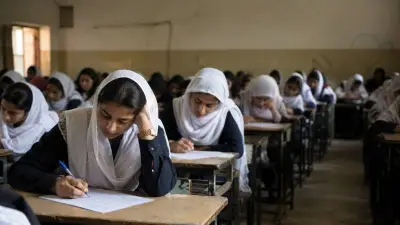
Pakistan's education system is grappling with a profound challenge: the language of instruction. For millions of students, the medium of teaching is not their mother tongue, creating a significant barrier to learning and cognitive development. This issue is particularly acute in rural areas where regional languages dominate, but Urdu or English are used in schools.
The Scope of the Problem
According to a report by the Pakistan Education Statistics, over 70% of children in Pakistan are taught in a language different from the one they speak at home. This mismatch leads to poor comprehension, low retention rates, and high dropout rates. A study by the Aga Khan University found that students taught in their mother tongue in early grades perform 30% better in reading and math compared to those taught in a second language.
"The language barrier is one of the biggest obstacles to quality education in Pakistan," says Dr. Ayesha Razzaq, an education policy expert at the Lahore University of Management Sciences. "Children are forced to learn in a language they don't understand, which hampers their ability to grasp basic concepts and develop critical thinking skills."

Impact on Academic Performance
The consequences are stark. The Annual Status of Education Report (ASER) 2023 reveals that only 50% of Grade 5 students can read a Grade 2 level story in Urdu, and even fewer can do so in English. In mathematics, only 40% of Grade 5 students can perform simple division. These figures underscore the urgent need for language reform in education.
Moreover, the National Education Policy 2021 acknowledges the importance of mother tongue instruction in early years but implementation remains patchy. Many schools continue to use English as the medium of instruction from Grade 1, despite evidence that it hampers learning. "We need a phased approach that introduces mother tongue instruction in early grades and gradually transitions to Urdu and English," suggests Dr. Razzaq.
Socio-economic and Regional Disparities
The language burden disproportionately affects children from low-income families and rural areas. In Sindh, for instance, Sindhi is the mother tongue for many, but schools often use Urdu or English. Similarly, in Balochistan, Balochi, Pashto, and Brahui speakers face similar challenges. This linguistic divide exacerbates educational inequality and limits social mobility.
"Children from privileged backgrounds often have access to English-medium schools, while the poor are stuck in schools where they neither learn the language nor the content," notes education activist Imran Khan. "This perpetuates a cycle of poverty and illiteracy."
Way Forward
Experts recommend a multilingual education model that uses the mother tongue as the primary language of instruction in early grades, with gradual introduction of Urdu and English. Countries like India and South Africa have successfully implemented such models. Pakistan's own experiences in provinces like Khyber Pakhtunkhwa, where Pashto is used in primary schools, show promising results.
"The government must invest in teacher training, curriculum development, and learning materials in regional languages," emphasizes Dr. Razzaq. "Without addressing the language barrier, we cannot achieve universal quality education or the Sustainable Development Goal 4."