Hezbollah Claims Attack Destroyed Israeli Tanks in Southern Lebanon
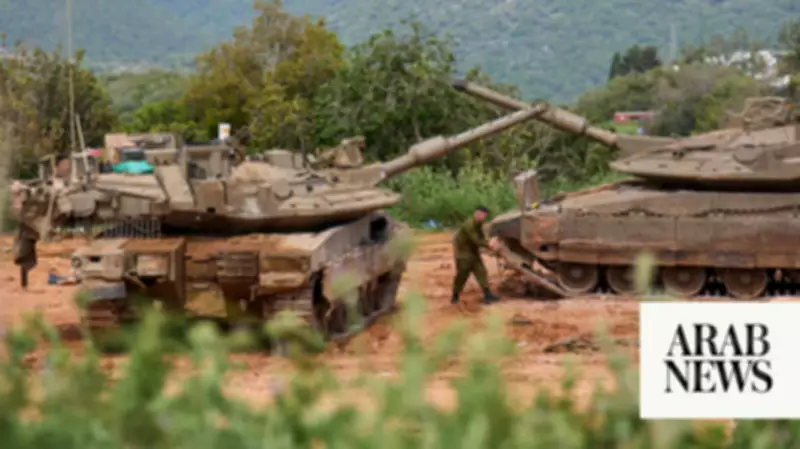
Hezbollah has asserted responsibility for an attack that it claims destroyed four Israeli tanks in southern Lebanon, marking the group's first offensive action since a recent ceasefire took effect. According to a statement released by Hezbollah on Monday, fighters planted bombs that exploded and destroyed the tanks as part of a convoy of eight vehicles passing through the village of Deir Siryan.
Details of the Attack and Ceasefire Context
The attack reportedly occurred on Sunday afternoon, targeting Israeli forces in the region. This incident represents a significant escalation, as it is the first claim of an attack by Hezbollah since a 10-day ceasefire went into effect at midnight on Thursday. The ceasefire had been established to de-escalate tensions following intense clashes in the area.
Hezbollah's statement did not provide further specifics on casualties or damage beyond the destruction of the tanks. The Israeli military has not issued an immediate comment regarding this latest claim, leaving the details unverified by independent sources.

Israeli Military Actions and Claims
In a related development, the Israeli army earlier stated that it conducted a series of strikes resulting in the deaths of more than 150 Hezbollah fighters. Among those reportedly killed was Ali Rida Abbas, whom Israel identified as Hezbollah's commander in Bint Jbeil, a southern Lebanese town that has been a focal point of recent hostilities.
The region around Bint Jbeil witnessed fierce clashes between Israeli troops and Hezbollah militants in the days leading up to the ceasefire. However, Israel has not presented evidence to substantiate its claims about the casualties, and Hezbollah has not immediately confirmed the death of its commander, adding a layer of uncertainty to the situation.
Broader Implications and Regional Tensions
This attack and the preceding Israeli strikes highlight the fragile nature of the ceasefire and the ongoing volatility in southern Lebanon. The conflict between Hezbollah and Israel has deep historical roots, with periodic flare-ups threatening regional stability. The lack of immediate confirmation from either side on key claims underscores the challenges in verifying information in such a high-stakes environment.
Analysts suggest that this incident could test the durability of the ceasefire, as both sides may be positioning for leverage in future negotiations. The international community is closely monitoring the situation, given the potential for broader escalation in the Middle East.
As developments unfold, further updates are expected from military and diplomatic channels. The situation remains fluid, with concerns about potential retaliatory actions or breaches of the ceasefire agreement.