Pakistan Voices Confidence in US-Iran Dialogue Amid Regional Tensions
On Thursday, Pakistan conveyed a sense of optimism regarding the ongoing efforts to facilitate negotiations between the United States and Iran, despite the presence of heated rhetoric from various sides. The Foreign Office underscored the significant commonalities and widespread international appreciation for its diplomatic initiatives, including the five-point peace plan announced in Beijing and the seven-point summary from the quadrilateral talks held in Islamabad.
Commitment to Peace and Dialogue
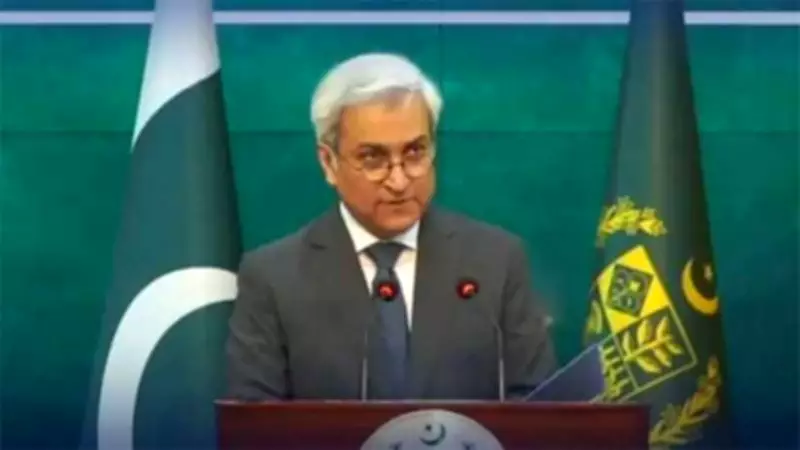
Foreign Office spokesperson Tahir Andrabi, during his weekly press briefing, articulated Pakistan's steadfast commitment to fostering peace. "It is an effort towards ending war. It is an effort towards cessation of hostility. And it is an effort towards paving the way for a sustainable pathway towards finding the lasting settlement of these ongoing hostilities," he stated. Andrabi emphasized that Pakistan is gratified by the confidence placed in it by both the US and Iran to act as a facilitator in these critical talks.
He reiterated Pakistan's principled stance, anchored in the human charter, with the overarching aim of promoting peace and stability across the region. The spokesperson clarified that Pakistan condemns all attacks, including those carried out by Iran against Gulf countries and prior incidents targeting Iran itself.

Clarifications on Delegations and Misconceptions
When questioned about the specifics of the US and Iran delegations' visits to Pakistan for talks, Andrabi noted that the content, delegation members, and dates are to be determined solely by the involved parties. He also addressed inquiries about potential Israeli participation, stating he had no such information. However, he highlighted Pakistan's ongoing discussions with the US, European partners, the Organization of Islamic Cooperation (OIC), and Gulf Cooperation Council (GCC) countries, some of which maintain diplomatic ties with Israel.
"So, our efforts would continue despite these complications that may arise in this very challenging facilitative process. So, whilst the challenges are there, whilst the obstacles could be there, we would continue our pursuit of facilitation and our advocacy for dialogue," Andrabi remarked. He firmly rejected any notion that Pakistan is pressuring Iran to acquiesce to US demands, asserting that the country advocates for dialogue and diplomacy, which should not be misinterpreted as imposing any specific policy.
Positive Developments and Regional Cooperation
In a notable development, Andrabi informed the media that the Iranian government has permitted an additional 20 ships under the Pakistani flag to transit through the strategic Strait of Hormuz, with two ships crossing daily. "This positive announcement marks a meaningful step forward towards strengthening our collective efforts in the direction of dialogue, diplomacy, and confidence-building measures, the only way forward," he declared.
The spokesperson also addressed misinformation, cautioning against a deep nexus between purveyors of fake news in Afghanistan and India. He refuted claims that Iran is not participating in the talks, labeling such reports as misrepresented and dangerous in the current sensitive climate. "They are habitual liars. And in this situation where we have a delicate, sensitive process of facilitation of dialogue taking place, and in this age where hostilities and a practical war-like situation are prevailing in our region, such news peddling can be extremely dangerous," Andrabi warned.
International Support and Domestic Rebuttals
Andrabi highlighted that the European Council and countries such as Malaysia have expressed support for the seven points of the Quad talks and the five-point peace plan issued during Deputy Prime Minister and Foreign Minister Ishaq Dar's visit to Beijing. "So, everybody wants peace. Everybody and any supporter of peace would appreciate this initiative by Pakistan... So, when there are ongoing hostilities, a certain level of rhetoric is also expected from the parties. We are not deterred by that sentiment... We will continue to do so despite the statements or positions expressed by relevant parties," he affirmed.

Responding to remarks from an Indian government spokesperson about the Shia community in Pakistan, Andrabi emphatically rejected the comments as cynical and diversionary. He criticized India for framing Pakistani Shias within a majority-minority paradigm, despite their integration as mainstream Muslims, calling it a dangerous attempt to incite sectarianism and discord within Pakistani society. Andrabi cited verifiable records indicating around 100 incidents of Muslim lynching annually in India, where perpetrators often evade judicial oversight under state patronage.
Engagement on Afghanistan and Diplomatic Outreach
Regarding Pakistan-Afghanistan talks in Urumqi, Andrabi stated that Pakistan has dispatched a delegation to support a credible process aimed at finding a durable solution to sanctuaries and halting cross-border terrorism from Afghanistan. "Our participation is a reiteration of our core concerns. The burden of real process, however, lies with Afghanistan, which must demonstrate visible and verifiable actions against terrorist groups using Afghan soil against Pakistan," he emphasized.
He further noted that any intent expressed by the Afghan side must be backed by concrete, verifiable assurances in written format, ensuring their territories are not used for cross-border terrorism. Andrabi recalled that a similar documented intent was inked by the Taliban in Doha in 2021 but was not honored.
On domestic security, Andrabi confirmed that Operation Ghazab-Lil Haq is ongoing, with recent actions by Pakistani security forces, and clarified that there is no change in the operation due to any ongoing talks.
High-Level Diplomatic Interactions
Highlighting other diplomatic activities from the past week, the spokesperson mentioned Prime Minister Shehbaz Sharif's telephone conversations with the Crown Prince of Kuwait, President of Iran Dr. Masoud Pezeshkian, and President of the European Council António Costa. Similarly, Deputy Prime Minister Ishaq Dar held calls with the Foreign Ministers of China, Egypt, Qatar, Indonesia, and Iran, as well as UN Secretary-General António Guterres. These discussions covered regional issues, bilateral matters, and global concerns of mutual interest.