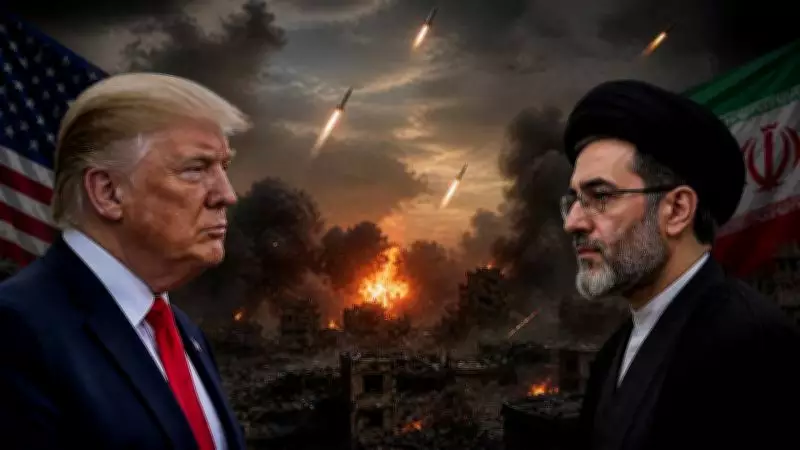
We are living in dangerous times. The world stands on the edge, with the rule-based international order severely mauled. The foreign and security policy of the superpower is in disarray and thoroughly under the influence of Zionist lobbies operating in tandem with Israeli administrations. Previous US presidents resisted Tel Aviv's pressure to invade Iran, but President Donald Trump did not withstand Netanyahu's anti-Palestine and anti-Iran enmity. He invaded Iran without any exit plan or clear objectives. A two-month war has exposed the limits of US military power and isolated it globally.
Background of the Conflict
During his first term, President Trump terminated the Joint Comprehensive Plan of Action (JCPOA), which had been laboriously crafted by the Obama administration to negotiate a solution to Iran's nuclear program. In his second term, he colluded with Israel to deceitfully impose war on Iran in June 2025, and again on 28 February 2026 while holding talks. According to Omani intermediaries, both sides were close to a deal. Netanyahu likely opposed a negotiated solution and tricked Trump into invading Iran again.
In the two-week war in June 2025, the coalition bombed Iran ferociously, assassinating senior military officials and nuclear scientists, and struck three known nuclear sites with B2 bombers. Trump boasted of annihilating Iran's nuclear program, but the International Atomic Energy Commission later cast doubt on this claim, reporting no radiation emissions from those sites. Iran was re-engaged in talks, but under the guise of negotiations, the coalition prepared for a decisive attack. Publicly declared objectives included the annihilation of the clerical regime, termination of Tehran's nuclear program, and Iran's renunciation of support for proxies like Hezbollah, Houthis, Hamas, and Iraqi militant groups.

Pakistan and the Architecture of Controlled Stability
Earlier, attempts were made to replay the drama of public uprising against the clerical regime, reinventing the CIA-sponsored demonstrations that overthrew Prime Minister Muhammad Mossadegh in 1953. The real objective of the invasion was to destroy the Islamic regime and install a pliable leadership in Tehran to support the Jewish project of 'Greater Israel'. The clerical regime was the greatest hurdle to this project. Trump's psychological warfare will not succeed. He has played all his cards except one: declare victory unilaterally and exit the war, saving humanity from a Third World War.
Israel sought regime change to eliminate this hindrance, while Trump eyed Iran's oil and gas, similar to Venezuela. Empires never abandon their rapacious urge for resources; they only change methods, inventing new narratives for capturing resources in the name of democracy, human rights, and freedom. Despite economic sanctions, Iran remained alert to the hostility of Israel and the US for 46 years and prepared to defend itself.
The first wave of airstrikes on 28 February was unprecedented in intensity and precision, eliminating the entire senior military and political leadership, along with 180 innocent girls whose school was mistaken for a strategic site. Over 11,000 targets were bombed in the first two weeks. Any other nation would have struggled to survive such an intensive attack, but the Iranian people stood firm, frustrating their enemies. Iran's effective war strategy did not concede a single objective to the invaders. Within weeks, Iran forced the aggressors to plead for a ceasefire and restart talks mediated by Pakistan.
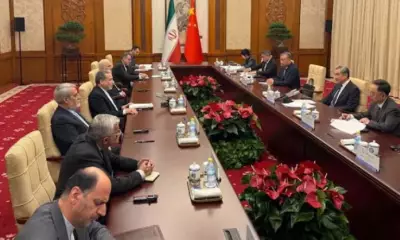
The ceasefire, though fragile, has survived Trump's blusters, threats, and abusive statements, as well as Israel's provocative actions in southern Lebanon. However, Trump's belligerence and shifting goals, combined with Israel's spoiling tactics, have slowed the talks. They seek total surrender of Iran, reflecting an arrogant approach.

The Illusion of Liberation and the Western Freedom Myth
Can Iran be collapsed? The US and Israel are militarily and economically strong, but other factors—including US isolation, potential global recession, public aversion to distant wars, rising inflation, Trump's growing unpopularity, and potential midterm election defeat—create strong incentives for US leadership to force Trump to exit the war. Iran, with its strategic depth of 1.6 million square kilometers, challenging topography, civilizational pride, high public endurance, and a large fighting force comprising the national army, IRGC, and other militias, could fight for decades instead of surrendering.
The US has blockaded Persian seaports to strangle Iran economically, but the blockade of the Strait of Hormuz also disrupts Gulf States' trade and the global economy. Iran survived severe economic sanctions for four decades; this economic aggression, though harsher, will not cripple it. Mounting pressure on the US to open the Strait to avert economic chaos and food shortages is evident in Trump's recent efforts to force it open against Pentagon advice. However, no shipping company or country would use the Strait under the shadow of battling gunboats.
Another US option is to resort to devastating airstrikes to demoralize Iran's military and political leadership, creating chaos for violent regime change and Iranian surrender. This would plunge the region into decades of violence, militancy, and instability. US firepower has failed to collapse the Iranian nation. Trump's psychological warfare will not work. He has played all his cards except one: declare victory unilaterally and exit the war, saving humanity from a Third World War.
Israel–Iran Escalation Signals a Dangerous Collapse of Global Restraint
Tags: Iran war 2025, US foreign policy crisis, Strait of Hormuz tensions, Israel Iran conflict analysis, global power shift geopolitics
Share: Ambassador M. Alam Brohi, the writer, is a former Ambassador.