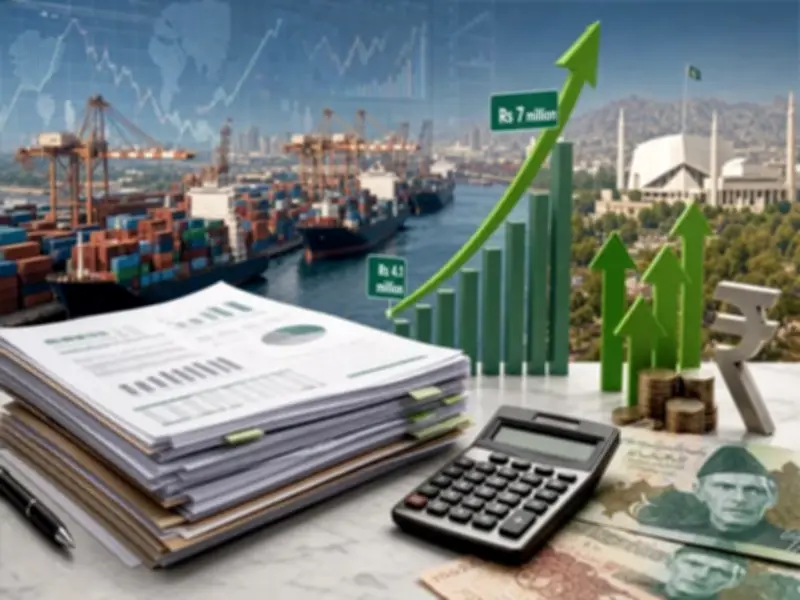
Pakistan's Fiscal Misdirection
ISLAMABAD: The annual budget ritual in Pakistan attempts to prove economic growth while adding to poverty, debt, and unemployment. Another regular ritual involves an IMF delegation arriving, greeted with anxious hospitality. Economic managers scramble with spreadsheets, and the decree is always the same: broaden the tax base. Yet policymakers tax the salaried class a little more, showcasing economic myopia.
Untapped Goldmines
Pakistan's fiscal struggle is not a tragedy of scarcity but a comedy of misdirection. While the formal sector carries the weight of national revenues, massive swaths of the economy remain tax-free. To bridge the fiscal deficit, we do not need harsher austerity but to look where the money actually is.
Real Estate: A Capital Graveyard
Pakistan's obsession with plots means billions of dollars are buried in housing societies instead of fueling industrialization. The real estate sector is worth hundreds of billions of dollars, yet its tax contribution is negligible. A dual-value system allows trillions in undocumented wealth. Enforcing market-based valuation and taxing capital gains could generate massive revenue and force capital into productive sectors.

Agriculture: The Invisible Giant
Agriculture contributes over 22% of GDP but less than 1% of direct income tax. Small-scale farmers need subsidies, but large feudal estates enjoy tax havens. Provincial assemblies, populated by landlords, keep rates negligible. Harmonizing agricultural income tax with federal rates for large landholders could unlock significant revenue.
Retail and Wholesale: Cash Economy
The retail sector accounts for nearly 18% of GDP but remains undocumented. Traders resist tax schemes with strike threats, and the government backs down. Documenting retail through POS integration could yield hundreds of billions in taxes.
Digital Economy: Ignored Potential
Pakistan has a large freelance workforce bringing in millions, yet the state provides poor internet and power. Integrating payment gateways like PayPal and treating IT exporters with incentives could boost foreign exchange reserves and tax revenue.
The Vicious Cycle
Lacking political will to confront these sectors, the state resorts to regressive taxes on consumption, hurting the poor. This stifles growth, reduces revenue, and leads back to the IMF. Pakistan has an enforcement problem, not a revenue problem. Untapping undocumented sectors is key to economic sovereignty.