The United Nations has issued a grave warning that war-torn Gaza is heavily contaminated with unexploded ordnance, which continues to kill and maim civilians and could severely hamper recovery efforts for years to come. Since the onset of Israel's military campaign in the Palestinian territory, undetonated bombs, grenades, and even bullets have become a common and deadly presence across the strip.
UNMAS Reports Over 1,000 Deaths from Explosive Remnants
The UN Mine Action Service (UNMAS) stated that data indicates more than 1,000 people have been killed in Gaza due to what it terms 'indirect conflict' from explosive remnants of war. However, Julius Van der Walt, UNMAS chief in the Occupied Palestinian Territory, emphasized that this figure is likely a severe undercount, as comprehensive data collection remains extremely challenging amid ongoing hostilities.
Child Casualties Highlight the Crisis
Narmina Strishenets of Save the Children UK joined Van der Walt at a press conference on global mine action, drawing attention to the devastating impact on children. A Save the Children report from last year found that in 2024, explosive weapons in Gaza caused an average of 475 children each month to suffer potentially lifelong disabilities, including amputations. Strishenets noted that Gaza now has 'the largest cohort of child amputees' in the world, underscoring the long-term humanitarian crisis.

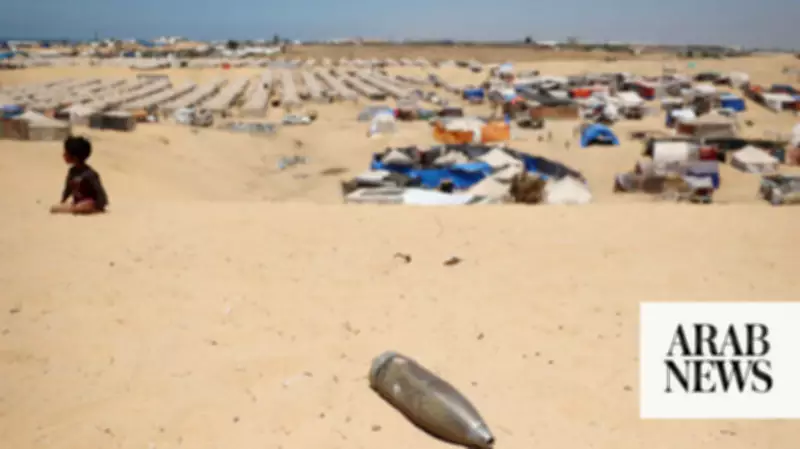
Van der Walt explained that UNMAS has not yet been able to conduct a full survey of the contamination, but existing evidence already points to a high density of explosive ordnance across the Gaza Strip. Over the past two and a half years, UNMAS has identified more than 1,000 items of explosive ordnance during its missions. Given Gaza's small size, this equates to roughly one piece of ordnance every 600 meters. However, Van der Walt acknowledged that these findings represent only a fraction of the actual contamination, stating, 'We have barely scratched the surface in understanding what the level of contamination is.'
High Population Density Amplifies Danger
The danger is compounded by Gaza's extreme population density. Before the conflict, Gaza was already one of the most densely populated places on Earth, with about 6,000 people per square kilometer. The war has effectively halved the available living space, doubling the density in many areas. Explosive weapons have been used extensively in densely populated refugee camps, and Van der Walt cited a recent case where ordnance was discovered inside a tent that had been occupied for weeks. Humanitarian convoys also face the risk of detonation as they travel, while early recovery efforts remain stalled before they can even begin.
Massive Costs and Decades-Long Threat
Van der Walt pointed to an assessment indicating that, under the best-case scenario, addressing the explosive ordnance threat will cost approximately $541 million, provided all necessary permissions are granted and equipment is accessible. However, he warned that the contamination, including within mountains of debris, is so vast and varied that a full assessment is 'very close to impossible.' The ordnance will likely remain a problem for decades, similar to World War II bombs that still surface during construction projects in Britain. 'We can anticipate something along those lines in Gaza,' Van der Walt concluded.