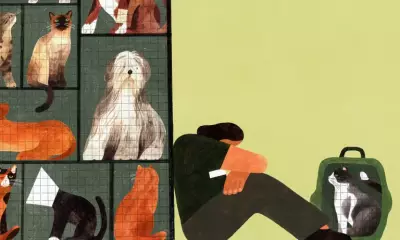
For nearly a decade, Lauren served as the animal control manager for a county in North Georgia. It was a round-the-clock, always-on kind of job, in which she and her employees responded to animal cruelty and neglect cases, dog attacks, and animal escapes. Saving animals was, and still is, Lauren's passion in life. But some weeks, the cruelty and the stress of the job got to be too much. It came to a head in early 2024 when she showed up to a man's house and found 27 hound dogs outside exposed to the freezing cold.
Lauren's story is not unique. Across the United States, animal control officers and shelter staff are overworked, underpaid, and frequently traumatized by their work. They face the daily burden of euthanizing animals, responding to neglect cases, and dealing with an indifferent public. This article explores the toll that America's pet overpopulation crisis takes on its frontline human workers.
The Compassion Fatigue Crisis
Compassion fatigue, the deep emotional and physical exhaustion resulting from intense caregiving, is rampant among animal shelter workers. Lauren quit her job in 2024 after a particularly harrowing week. She had to euthanize dozens of animals to make space for 27 hounds rescued from freezing conditions, then responded to a dog attack where police shot two dogs, and dealt with a disease outbreak at the shelter. 'How am I supposed to mentally and emotionally deal with all of that at one time?' she said.

This wasn't Lauren's first bout of compassion fatigue. In the 1990s, she worked at a shelter where she euthanized dogs for hours at a time, two to three times a week. The memories never leave. 'You will not forget the dog's name, you will not forget the animal's face,' said Caitlan Frazier, director of Aransas County Animal Care Services in Texas.
The Scale of the Problem
In 2025, nearly 6 million pets entered U.S. animal shelters. Ten percent were euthanized. That's an average of over 1,600 dogs and cats euthanized every day. The numbers have improved dramatically since 1973, when shelters euthanized 13.5 million animals, thanks to spay/neuter programs and rescue organizations. But the emotional cost for workers remains high.
Research dating back to the 1980s shows that performing euthanasia predicts poorer mental and physical health, including higher levels of work stress, lower job satisfaction, and higher rates of anxiety, depression, and substance abuse. The 'killing-caring' paradox, as sociologist Arnold Arluke calls it, means workers must kill animals they have cared for and bonded with.
Anger and Guilt
Many shelter workers express anger toward irresponsible pet owners: those who acquire pets without being ready, fail to spay/neuter, or dump unwanted animals. Bailey Smith of the Humane Society of Young County in North Texas said, 'It's draining, heartbreaking, and maddening, especially when the animal is young and healthy and you're euthanizing for space. I still cry sometimes.' Yet workers also feel guilt, even when euthanasia is necessary. Frazier still feels guilty about a dog named Bougie that bit her severely, wondering if more training could have saved him.
Physical and Emotional Toll
The job also takes a physical toll. Workers suffer injuries from animals, witness horrific cruelty, and face long hours. Keane Menefee, a former animal control officer in Fort Worth, Texas, quit in 2010 due to compassion fatigue. He experienced night terrors and attempted suicide. He now teaches courses on compassion fatigue for animal control officers. 'The job puts wear and tear on you on every level of your being,' he said.
Menefee also faced public backlash after appearing on The Oprah Winfrey Show in 2008 to discuss puppy mills. He received thousands of hateful emails, including death threats. 'I understand the sensitivity to euthanasia,' he said, 'but this is not the animal control's fault.'
What Shelter Workers Want You to Know
When asked what's needed most, the answer is money. Animal shelters operate on shoestring budgets, and there's never enough staff or space. The top priority should be low-cost spay and neuter programs. 'Spay/neuter — it's not sexy, it's expensive, it's constant, but it truly is the number one way to curb our pet overpopulation crisis,' said Shelby Bobosky, who teaches animal law at Southern Methodist University.

Other solutions include cracking down on puppy mills, strengthening animal cruelty laws, mandating spay/neuter, and restricting pet store sales. More pet-friendly housing and low-cost veterinary care are also critical. About one in five animals surrendered to shelters are given up because owners can't afford them or find housing.
How the Public Can Help
Individuals can make a difference by fostering animals, volunteering at shelters, donating to spay/neuter programs, and adopting instead of shopping. 'An animal starts mentally deteriorating in a shelter within three weeks,' Frazier said. Volunteers and enrichment activities can save lives.
For workers, talking about the challenges helps. 'I've had compassion fatigue three times in the last eight years,' Frazier said. Without peer support, she might have left the field. Menefee's training course on euthanasia and compassion fatigue is the most popular, as workers seek to know they're not alone.
Our relationship with pets is often portrayed as joyful, but there's a darker side. Millions of choices put animals through hell and push shelter workers into impossible situations. It's time to listen to their stories and take action to end the pet overpopulation crisis.