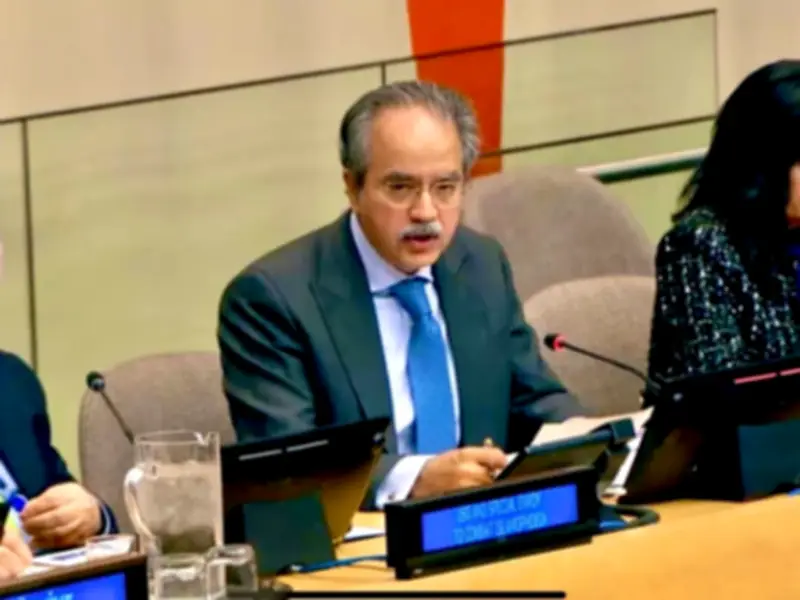
Pakistan and China jointly called for stronger mechanisms to ensure the implementation of United Nations Security Council (UNSC) resolutions, warning that selective or prolonged non-implementation undermines the council's credibility, weakens its authority, and prolongs unresolved conflicts, including those in Jammu and Kashmir and Palestine.
Arria-Formula Meeting on Implementation Gap
At a meeting convened by Pakistan and China on Thursday, titled "Bridging the Implementation Gap: Security Council Resolutions and the Maintenance of International Peace and Security," Pakistan's Permanent Representative to the UN, Ambassador Asim Iftikhar Ahmad, stated that Security Council resolutions are "not mere expressions of intent but legal obligations under the UN Charter." The meeting was briefed by UN Assistant Secretary-General Khaled Khiari, Security Council Report Executive Director Shamala Kandiah, and International Crisis Group's Richard Gowan.
Briefers Emphasize Implementation as Core to Credibility
The briefers stressed that implementation lies at the heart of the council's credibility, authority, and effectiveness. They argued that resolutions must be accompanied by realistic mandates, clear implementation pathways, sustained reporting, adequate resources, political will, and follow-up mechanisms capable of translating council decisions into action on the ground.

Pakistan Highlights Kashmir and Palestine
Ambassador Iftikhar said that "selective or prolonged non-implementation weakens the Council's authority, prolongs unresolved disputes and deepens human suffering," including in situations such as Indian Illegally Occupied Jammu and Kashmir (IIOJK) and Palestine. He noted that non-implementation of Security Council resolutions on the Jammu and Kashmir dispute has meant that "a major international dispute remained unresolved," resulting in "grave consequences for international peace and security" and prolonged suffering for the Kashmiri people.
Proposed Measures for Improvement
Pakistan's representative proposed a series of measures aimed at improving implementation, including an annual review of unimplemented and partially implemented resolutions, clearer implementation pathways, stronger follow-up mechanisms, and better alignment of the UN Secretary-General's good offices, peace operations, and regional arrangements with Security Council decisions.
International Response
According to a statement by the Ministry of Foreign Affairs, Security Council members and other participating states welcomed the initiative by Pakistan and China and shared views on strengthening the implementation of Security Council resolutions across both country-specific and thematic situations. "Participants emphasised that Security Council decisions should be realistic, actionable, and supported by sustained diplomacy, regular review, timely reporting, and adequate resources," it stated.
Reaffirming Commitment to Multilateralism
The statement further added that the meeting underscored that implementation remains a key test of the Security Council's credibility and relevance and reaffirmed that the council must ensure its decisions were carried forward with consistency, objectivity, and resolve. "By convening the discussion, Pakistan and China reaffirmed their commitment to multilateralism, the authority of the Security Council, and the purposes and principles of the UN Charter," said the ministry.