ISLAMABAD: Pakistan People's Party (PPP) Vice-President Senator Sherry Rehman has issued a stark warning that climate change, environmental degradation, and water scarcity are escalating threats to Pakistan's economy, food security, and public health. Speaking on World Environment Day, she urged immediate action to build climate resilience and protect natural resources.
Senator Rehman emphasized that Pakistan's environmental crisis is no longer a distant challenge but a present reality affecting millions. 'Pakistan is among the world's most climate-vulnerable countries, and the costs of inaction are becoming impossible to ignore,' she said.
She highlighted that Pakistan has suffered nearly $59 billion in climate-related losses over the past three decades, including over $29 billion in damages between 1992 and 2021 and an estimated $28 billion from the catastrophic floods of 2022. The 2025 floods caused an additional $1.5 billion in losses to the agriculture sector.

Rising Temperatures and Water Scarcity
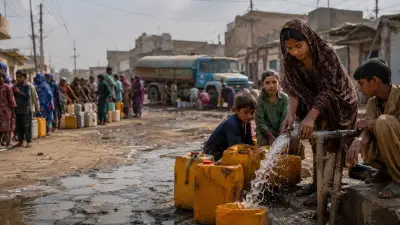
Senator Rehman noted that temperatures in southern Pakistan increasingly exceed 50°C, while heatwaves, erratic rainfall, water shortages, and declining crop yields are becoming more frequent. 'These are no longer future risks; they are today's realities. Vulnerable communities are already paying the price,' she warned.
The PPP leader cautioned that climate change could reduce Pakistan's GDP by up to 20 percent by 2050 if corrective measures are not taken. Per capita water availability has fallen from over 5,000 cubic meters at independence to below 1,000 cubic meters, placing Pakistan dangerously close to absolute water scarcity.
Agricultural and Glacial Threats
Agriculture consumes more than 90 percent of the country's available water, while inefficient irrigation systems, groundwater depletion, and changing glacier-melt patterns strain supplies. Pakistan possesses over 13,000 glaciers—the largest concentration outside the polar regions—which sustain the Indus River system and support nearly 90 percent of national food production. However, shrinking glaciers and Glacial Lake Outburst Floods (GLOFs) pose serious threats to communities in Gilgit-Baltistan and Khyber Pakhtunkhwa.
Pollution and Waste Management
Addressing pollution, Senator Rehman said Pakistan generates over 50 million tonnes of solid waste annually, much of it inadequately managed, creating significant environmental and health hazards. Plastic pollution is a major challenge, with Pakistan producing nearly three million tonnes of plastic waste each year while recycling rates remain extremely low.
'Plastic pollution has infiltrated our rivers, coastlines, soils, food chains, and water supplies. Reducing single-use plastics is no longer optional; it is essential,' she said. She highlighted recent legislative efforts, including the Prohibition of Plastic Book Covers Bill, 2026, for the Islamabad Capital Territory.
Circular Economy and Renewable Energy
Senator Rehman stressed the need to transition towards a circular economy based on resource efficiency, recycling, innovation, and sustainable production. 'Environmental protection and economic growth are not competing goals. A circular economy can create jobs, reduce emissions, conserve resources, and strengthen resilience,' she said.
Regarding air quality, Pakistan remains among the world's most polluted countries, with fine particulate pollution far exceeding international health standards. Despite challenges, she pointed to growing opportunities in renewable energy, particularly solar power, noting that Pakistan has emerged as one of the world's fastest-growing solar markets.
Call for Collective Action
Senator Rehman urged governments, businesses, civil society organizations, and citizens to work together to conserve water, reduce pollution, strengthen climate resilience, and expand renewable energy. 'The choices we make today will determine the future we leave to generations yet to come. The environment is not separate from our future—it is our future,' she concluded.