The pro-Iran Hezbollah movement rejected a new ceasefire in Lebanon on Thursday, and Israel said it would not withdraw troops from the country, undermining U.S. President Donald Trump's efforts to halt fighting there to forge peace with Tehran.
Hezbollah's Stance
Hezbollah leader Naim Qassem rejected the Washington declaration, insisting 'resistance will continue.' He demanded a comprehensive ceasefire and the withdrawal of Israeli troops from Lebanon, urging authorities to abandon direct talks with Israel after a truce agreement was announced.
'The ceasefire must be comprehensive... without the Israeli enemy having the freedom to kill,' Qassem said in a televised message. He also vowed that 'as long as our villages are unsafe -- being bombed, destroyed and our people killed -- the settlements (north Israel) are unsafe.'

Israel's Response
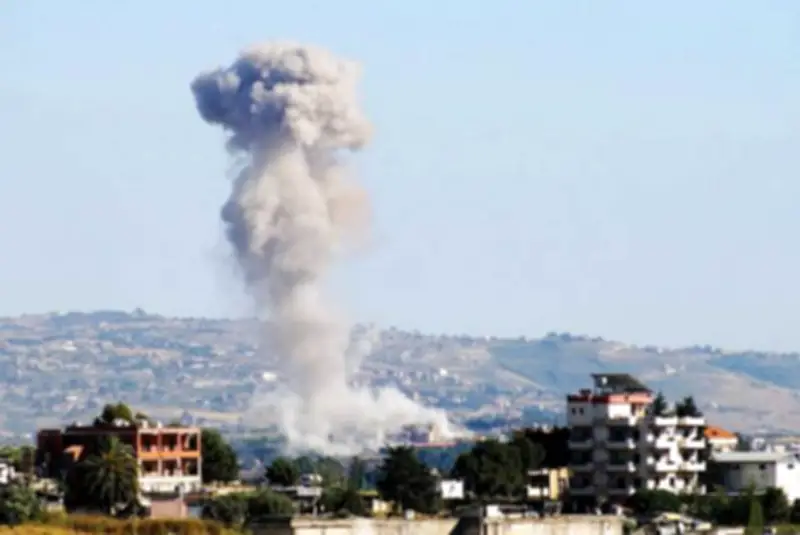
Israel kept up strikes in southern Lebanon on Thursday, and Defence Minister Israel Katz said Israeli forces would not be withdrawing from the area or halting operations in the country, which they invaded in March in parallel with the war in Iran.
Iran's Position
The commander of Iran's Revolutionary Guards Quds Force said 'the minimum demand of the resistance' was Israel's withdrawal to positions it held before the war began. 'Our initial condition for accepting a ceasefire in the regional war was a ceasefire on all fronts, including Lebanon,' a separate statement from the Guards said.
Esmail Qaani, head of the Quds Force, said in a social media post: 'Supporting the resistance in Lebanon is the duty of all of us, and removing Israel from the region is an attainable goal for Muslims. The minimum demand of the resistance is the withdrawal of the usurping regime (Israel) to the position it held before the start of the 40-day war.'
Regional Flare-Up
The attempt to reach a ceasefire in Lebanon comes after a flare-up in violence across the region that put Trump's efforts to end the war in new jeopardy. Iranian and U.S. forces traded attacks in the Gulf on Wednesday in one of the most intense bouts of fighting since a separate ceasefire halted large-scale U.S.-Israeli bombing of Iran in early April.
Iranian forces struck Kuwait, damaging its airport and injuring dozens of people, authorities said, while the U.S. military carried out strikes near the Strait of Hormuz. The strait remains largely closed more than three months after the U.S. and Israel launched their strikes on Iran.
Oil Market Impact
Oil prices fell by about 3% on Thursday on hopes that a Lebanon ceasefire could help Washington and Iran find a diplomatic off-ramp from their war. Trump suggested there could be progress in negotiations with Iran soon, saying 'If it happens, it could happen over the weekend.'
Pakistan's Mediation Role
Pakistan has said that despite the temporary halt in the Iran–US talks process and the exchange of attacks by the two sides, Islamabad will never lose hope as a mediator and believes that a peace agreement will soon become a reality. Pakistan's Foreign Office spokesman, Tahir Andrabi, told the media during his weekly briefing on Thursday that Pakistan, as an arbitrator and facilitator, would never lose hope because of minor setbacks.
'We will not lose hope despite the obstacles in the peace process. The situation, especially after the recent attacks, is still very delicate, but we remain part of the peace process,' he said.
Iranian Oil Shipments
Four Iranian-flagged oil tankers passed through the Strait of Hormuz on Monday, a first since April 15 and the US blockade of Iranian ports, according to maritime tracking firm Kpler. The tankers carried a total of seven million barrels of oil. They loaded their cargo in mid-April on Kharg Island, Iran's main oil terminal. The ships crossed the strait with their AIS transponders turned off.
Three other oil tankers linked to Iran had already defied the blockade on April 15, according to Kpler. None had attempted to do so since then.

US Reactions
US Secretary of State Marco Rubio condemned Iran's attacks on Kuwait, expressing condolences for those killed and injured. He reiterated the US commitment to Kuwait's security and to ensuring that Iran never acquires a nuclear weapon. President Trump suggested that Iran was 'provoked' into the attacks, saying 'Some people would say they were slightly provoked, because we took a strong action for a different reason, so they were reciprocating that.'