The Foreign Office of Pakistan reiterated on Thursday that its position on the Abraham Accords remains unchanged and is intrinsically linked to the establishment of an independent and viable Palestinian state. Islamabad also expressed readiness to once again host dialogue and facilitate diplomatic engagement between the United States and Iran if fresh momentum emerges in the peace process.
Pakistan's Role in Regional Diplomacy
Speaking at the weekly news briefing, Foreign Office spokesperson Tahir Andrabi said Pakistan welcomed recent remarks by US President Donald Trump expressing optimism about ongoing negotiations with Iran. He viewed such statements as encouraging for regional diplomacy. The spokesperson said Islamabad remained willing to facilitate and host talks between Washington and Tehran, recalling that Pakistan had previously offered to provide a venue for dialogue aimed at reducing tensions in the Gulf region. He stressed that Pakistan would continue to support diplomatic engagement and peaceful settlement of disputes despite periodic setbacks and armed exchanges that threaten ceasefire arrangements.
Position on Abraham Accords
Addressing questions regarding the Abraham Accords, Andrabi said Pakistan's position had not changed and remained tied to the realization of a sovereign, contiguous Palestinian state based on the pre-1967 borders, with Al-Quds Al-Sharif (Jerusalem) as its capital. This stance aligns with Pakistan's longstanding support for Palestinian rights.

Concerns Over Gulf Security
Commenting on the situation in the Gulf, Andrabi described recent military exchanges as deeply concerning and urged all parties to respect ceasefire understandings and avoid actions that could undermine dialogue. He condemned attacks targeting Kuwait, Bahrain, the United Arab Emirates and other states in the region, reaffirming Pakistan's support for the sovereignty, territorial integrity and security of all Gulf countries. The spokesperson said Pakistan remained committed to its role as a facilitator and mediator and would continue maintaining communication channels with all relevant parties. He expressed hope that diplomatic efforts would eventually produce a comprehensive agreement and lasting regional stability.
Pakistan-US Relations
On relations with the United States, Andrabi highlighted Deputy Prime Minister Ishaq Dar's recent visit to New York and Washington, where he participated in United Nations meetings and held discussions with senior US officials, including Secretary of State and National Security Advisor Marco Rubio. The spokesperson said the meetings reflected the positive trajectory of Pakistan-US relations and covered economic cooperation, trade, security collaboration, cultural exchanges and regional peace initiatives. Rejecting media reports suggesting that Pakistan had shared intelligence regarding Iran's nuclear intentions with the United States, Andrabi described such claims as entirely baseless and speculative. He clarified that discussions between Pakistani and American officials focused on regional stability, diplomacy and peaceful conflict resolution, and involved no intelligence sharing.

Indian Water Diversion Projects
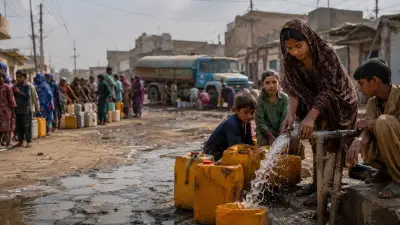
Turning to India's water-related projects, the spokesperson expressed grave concern over reports that New Delhi had issued tenders for the proposed Chenab-Beas Link Tunnel Project aimed at diverting approximately 1.9 million acre-feet of water annually from the Chenab River into the Beas system. He said such inter-basin diversion constituted a serious violation of the Indus Waters Treaty, the Vienna Convention on the Law of Treaties and broader principles of international water law. He also raised concerns over India's proposed silt-flushing project at the Salal Dam reservoir in Indian Illegally Occupied Jammu and Kashmir, warning that it could create water-control capabilities inconsistent with the Indus Waters Treaty and the 1978 Salal Agreement. Andrabi noted that India had neither officially informed Pakistan about these projects nor sought consultations. He accused India of attempting to weaponize water resources, warning that such actions could have serious consequences for Pakistan's economy, food security and regional stability. The spokesperson emphasized that Pakistan retained all available options to safeguard its rights under the Indus Waters Treaty and protect its national interests. He urged the international community to call upon India to abandon projects that seek to stop, reduce or divert waters legally allocated to Pakistan and to restore full implementation of the treaty.