Japan Downgrades Tsunami Alert Following Powerful 7.7 Magnitude Earthquake
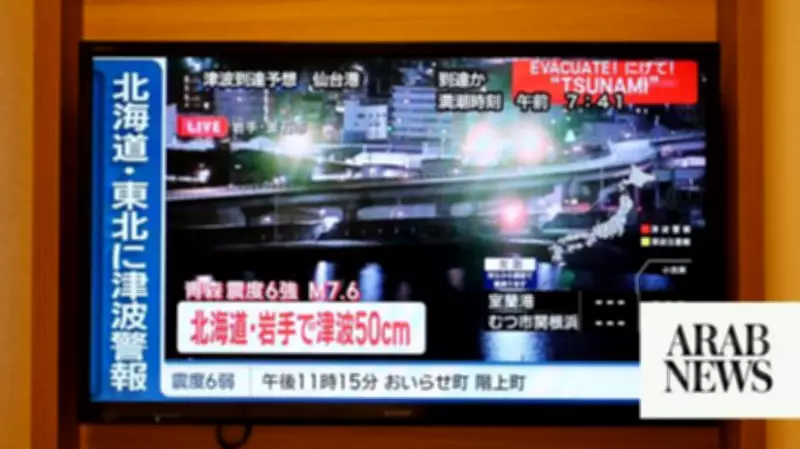
A significant seismic event rattled Japan on Monday, as a magnitude 7.7 earthquake struck off the northeastern coast of the country. The tremor, which occurred at 4:53 p.m. local time (0753 GMT), prompted immediate tsunami warnings and urgent evacuation orders for coastal communities.
Tsunami Warnings and Immediate Response
Authorities swiftly issued tsunami warnings, predicting waves as high as 3 meters (10 feet) could impact coastal areas. Residents were urged to move away from shorelines and seek higher ground. Public broadcaster NHK reported that several port towns, including Otsuchi and Kamaishi—both devastated by the 2011 earthquake and tsunami—issued evacuation orders affecting thousands of people.
Two hours after the initial quake, tsunami waves measuring up to 80 centimeters were detected. Subsequently, the Japan Meteorological Agency downgraded the tsunami warning to a tsunami advisory, indicating reduced but still present risks.

No Immediate Casualties or Major Damage Reported
As night fell in Tokyo, Japan's top government spokesperson, Minoru Kihara, addressed the media at a news conference. He confirmed that there were no immediate reports of casualties or major damage resulting from the earthquake and subsequent tsunami activity. This announcement provided a measure of relief amid the tense situation.
Transport Disruptions and Heightened Seismic Risk
The earthquake's impact extended beyond coastal warnings, causing significant disruptions to transportation networks. Bullet train services were halted, and some motorways were closed due to the tremors. The quake registered an 'upper 5' on Japan's seismic intensity scale, a level strong enough to hinder movement and potentially collapse unreinforced concrete-block walls.
In a concerning development, government officials issued a warning about a heightened risk of a megaquake in the aftermath. Normally, the probability of a magnitude 8 or stronger earthquake along the Japan Trench and Kuril Trench in the Pacific off northern Japan within a week is approximately 0.1 percent. However, following Monday's quake, this probability has increased to around 1 percent for the subsequent week.
"Please take anti-disaster steps, while embracing the idea that one must protect one's own life," urged a government official during a press conference, emphasizing the importance of preparedness.
Geological Context and Nuclear Safety
The earthquake's epicenter was located in the Pacific Ocean, at a depth of 20 kilometers, according to the Japan Meteorological Agency. Japan, situated in the seismically active "Ring of Fire," experiences frequent tremors, with an earthquake occurring approximately every five minutes. The country accounts for about 20 percent of the world's earthquakes of magnitude 6.0 or higher, including the catastrophic 2011 disaster that led to nuclear meltdowns at the Fukushima power plant.
In response to the recent quake, Hokkaido Electric Power Co. and Tohoku Electric Power Co. reported no abnormalities at their idled nuclear facilities in the affected regions. Currently, there are no operational nuclear power plants in these areas, mitigating potential nuclear risks.
Historical Echoes and Ongoing Vigilance
The event evoked memories of past disasters, particularly the 2011 earthquake and tsunami that caused widespread devastation and nuclear crises. While the immediate aftermath of this latest quake appears less severe, authorities remain vigilant. The downgraded tsunami advisory still advises caution, as even smaller waves can pose dangers, such as flooding low-lying areas and creating strong currents.
Japan's robust disaster response systems, including early warning alerts and evacuation protocols, were activated swiftly, showcasing the nation's preparedness in facing such natural hazards. Continuous monitoring and public advisories are ongoing as the situation develops.