Karachi Residents Voice Strong Opposition to India's Indus Waters Treaty Suspension
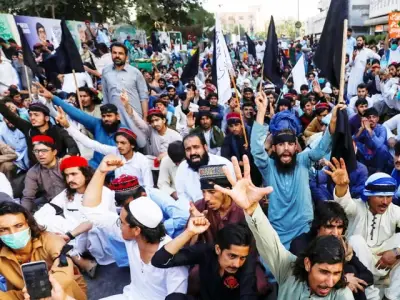
Citizens in Karachi on Wednesday issued a forceful condemnation of India's decision to place the 1960 Indus Waters Treaty (IWT) in abeyance, describing the move as unjustified and contrary to the foundational principles of bilateral agreements. In detailed conversations with APP, residents from diverse backgrounds expressed deep concern over what they perceive as an attempt to politicize a critical resource that sustains millions of lives across the region.
Concerns Over Politicization of Water Resources
Hafeez, a schoolteacher, emphasized that water is a fundamental necessity and should never be leveraged as a tool for political pressure. He argued that international agreements must be honored both in their explicit terms and underlying spirit, warning that unilateral actions only serve to exacerbate mistrust and instability in South Asia. "Agreements between nations are built on trust and mutual benefit," Hafeez stated. "When one side disregards this, it undermines the very fabric of regional cooperation."
Impact on Ordinary Citizens and Calls for Restraint
Sadia Rahman, a homemaker living in Clifton, highlighted the disproportionate impact on everyday people when interstate tensions escalate. She remarked that rivers, as natural blessings, cannot be controlled arbitrarily like switches, urging for restraint and constructive dialogue instead of confrontation. "Ordinary families suffer the most from these disputes," Sadia noted. "We need leaders who prioritize peace and shared resources over conflict."

Fear and International Accountability
Naeem Ali, a screenplay writer, observed that such decisions generate unnecessary fear among citizens, disrupting social harmony. He asserted that Pakistan has a legitimate right to protect its water share and called on the global community to address what he termed an irresponsible step. "This is not just a bilateral issue; it affects regional stability," Naeem said. "The international community must hold accountable those who violate longstanding treaties."
Historical Context and Regional Stability
Ismail, a university student, expressed disappointment, noting that the treaty has endured previous wars and political upheavals. He argued that undermining such agreements sends a negative signal about the commitment to regional peace. "The Indus Waters Treaty is a testament to resilience," Ismail explained. "Weakening it now threatens the progress we've made toward stability."
Diplomatic and Legal Responses
Ali Gul, a retired government officer, criticized the move as reflecting a lack of mutual respect between neighboring countries. He expressed confidence that Pakistan would pursue diplomatic and legal avenues to safeguard national interests while advocating for adherence to international commitments. "Pakistan has the capability and resolve to respond through proper channels," Ali Gul affirmed. "We must ensure our rights are protected without escalating tensions."
Collective Emphasis on Cooperation Over Conflict
The residents collectively stressed that rivers serve as vital connectors across borders and should foster cooperation rather than conflict. They called for peaceful engagement and strict adherence to international obligations to ensure regional harmony and long-term stability. Their unified message underscores the importance of treating shared water resources as a bridge for collaboration, not a weapon for discord.